







You've probably heard the saying "you are what you eat." There's a lot of truth in it: food is your body's fuel, and the kind of fuel you give it shapes how your engine runs every day.
But there's a detail almost nobody tells you, one we've observed for years at NaturalSlim while supporting thousands of people: not every "healthy" food agrees equally with everyone. A food that's perfect for one person can sit heavily with another. Understanding that changes the whole way you look after yourself.
What we mean by "aggressor foods"
In the everyday language of our members, we call "aggressor foods" the foods that simply don't agree with your particular body. It's not an illness, and it's nothing to diagnose — it's a practical observation about your own day-to-day.
And here's the key point: it's not your fault — you were just missing information. If you've been taking care of yourself for a while and still don't feel quite right, you may not be doing anything wrong. You may simply need to understand better how your body responds to what you eat.
Every body is different
Here's the interesting part: an aggressor food can be almost anything, and it's different for each person. What suits your neighbour perfectly may leave you heavy, bloated or low on energy.
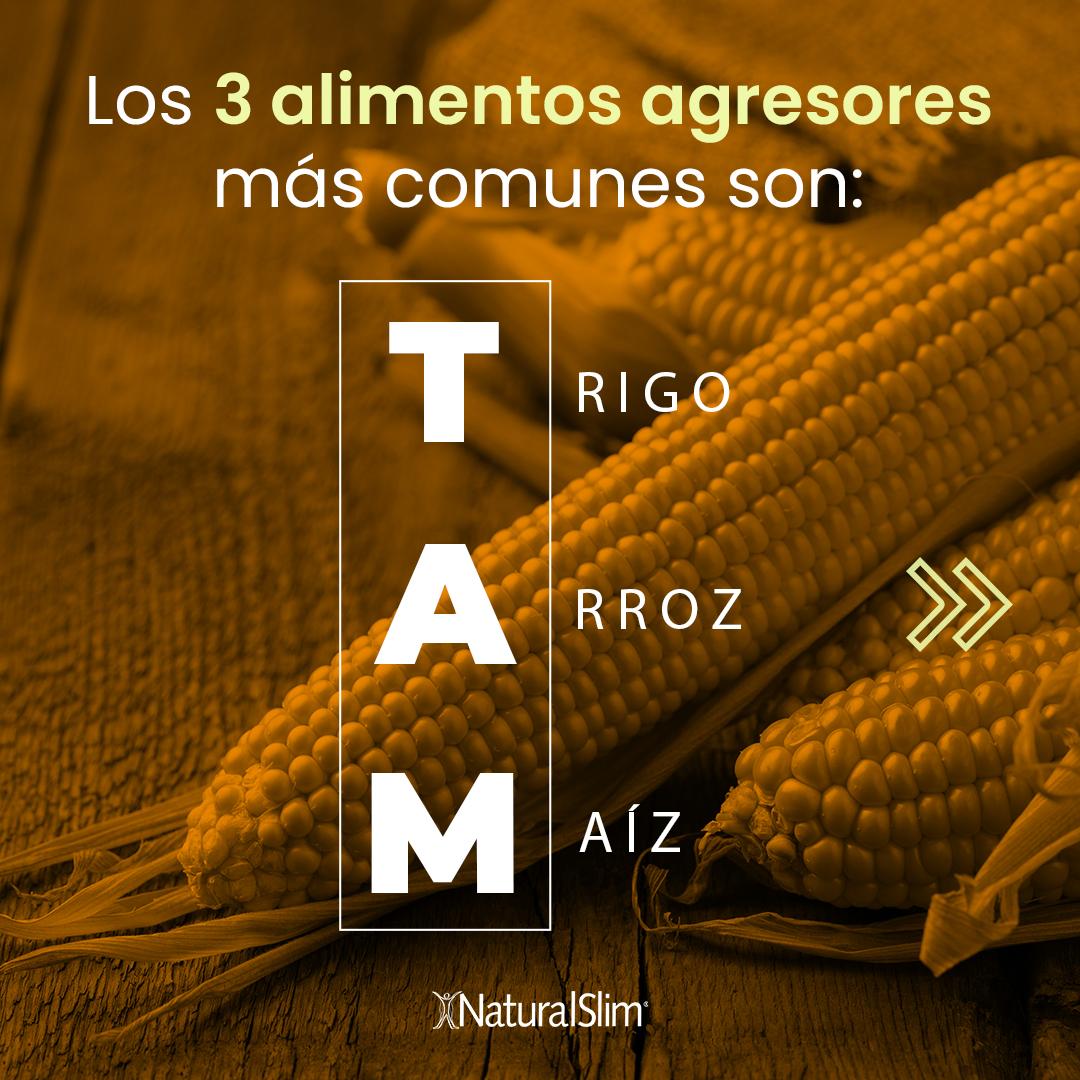
Over the years we've seen that, for many people, the foods that tend to "weigh them down" belong to the refined-carbohydrate family: wheat, rice and corn, and the products made from them. But it's not a universal rule. Some people notice that certain vegetables or certain proteins don't sit well with them either. That's why we keep saying it: everyone has their own list.
How to learn to recognise yours
The best tool you have isn't sold in any shop: it's your own attention. Your body is alive and constantly speaking to you — you just have to learn to listen.
Here are a few simple signals to notice after a meal:
- A feeling of heaviness or bloating you didn't expect.
- Tiredness or a dip in energy soon after eating.
- A craving for something sweet a little while later.
- Feeling foggier or less clear-headed in the afternoon.
A practical way to discover this is to observe calmly: if you suspect a food, notice how you feel in the hours that follow. It isn't about obsessing or banning anything — it's about getting to know yourself better, meal by meal.
This fits with the 3x1 Diet®
Knowing your aggressor foods doesn't mean living on a list of bans. In the NaturalSlim® System we don't believe in cutting out whole food groups or going hungry. We believe in balance.
That's why we use the 3x1 Diet®: a lifestyle, not a diet. The idea is simple: on your plate, three quarters Type A Foods (the ones that help you slim down: vegetables, salads, proteins) and one quarter Type E Foods (the ones that fatten most: bread, rice, flour-based foods, sweets). When you also know the foods that don't agree with you specifically, you can fine-tune that plate to fit your own body.
The role of rest and nutrients
Slimming down in a sustainable way isn't about a single trick — it's about looking after several pieces at once: nutrition, rest, hydration and the support of someone who understands your metabolism.
Within that daily routine, many people add supplements for the nutrients they provide. For example, MagicMag® provides magnesium, a mineral that contributes to the normal functioning of the nervous system and to a reduction of tiredness and fatigue. It's one more piece of support within a well-organised day — not a magic solution.
You don't have to figure it out alone
Identifying your own aggressor foods is far easier with someone who has walked the path many times before. That's why, within the NaturalSlim® System, each person has a Certified Metabolism Consultant™ who supports them week by week and helps them interpret what their body is telling them.
If you'd like to start understanding your metabolism better, there's nothing to buy to take the first step. Discover the NaturalSlim program and talk to a consultant who will listen and guide you according to your situation. Remember: knowledge is power, and you can never solve a problem you don't understand.



Share:
What Are Type E Foods? The List That Changes Your Plate
Type A foods: the ones that help you slim down on the 3x1® Diet